Remaches Especiales
Productos
- View as
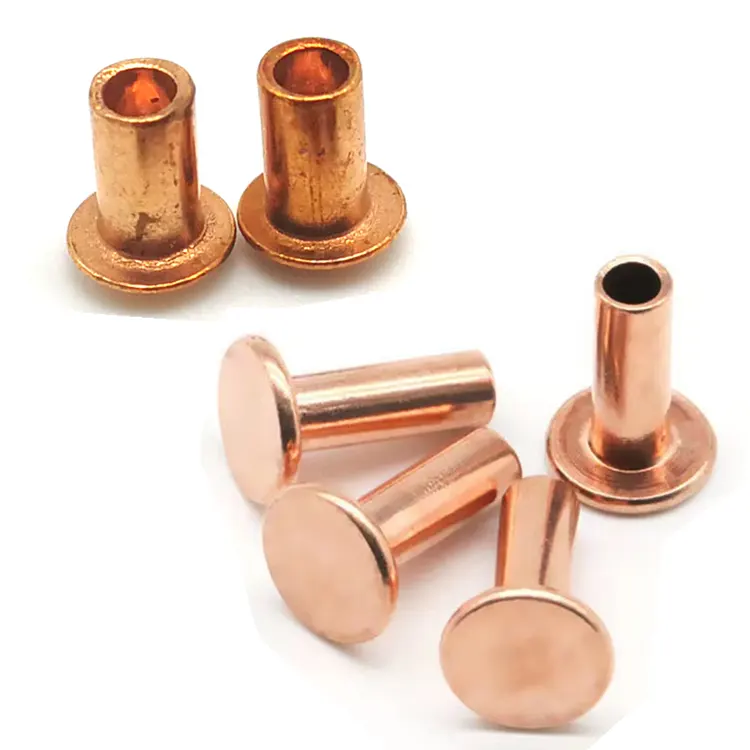
Remaches de cobre
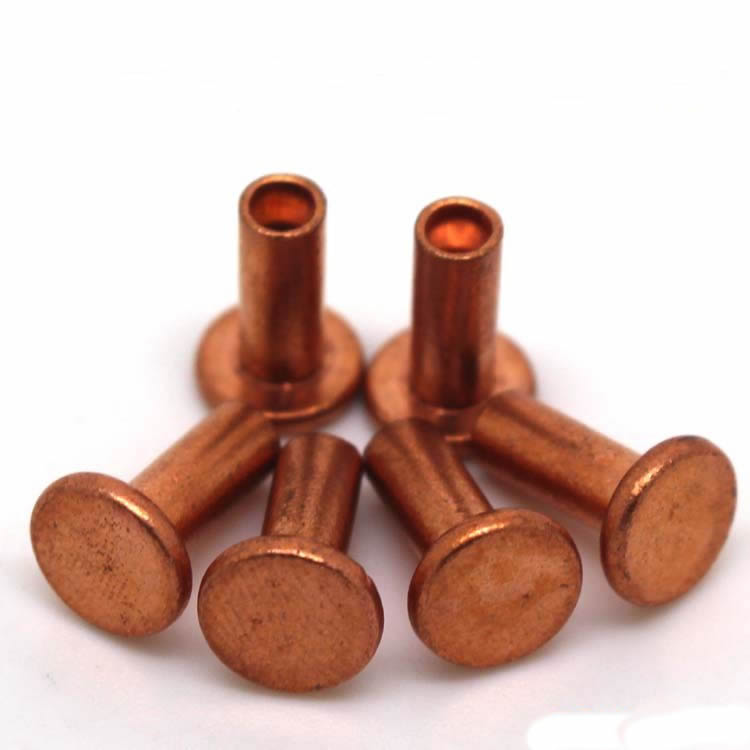
Nuote Metals es un fabricante profesional de remaches ubicado en Dongguan, China. Los remaches de cobre que fabricamos están hechos de cobre C1100. Los remaches de cobre son un sujetador de uso común. El cobre tiene una excelente conductividad térmica, lo que lo hace ampliamente utilizado en aplicaciones eléctricas y de disipación de calor. Además, los remaches de cobre ofrecen una excelente maquinabilidad y plasticidad, lo que permite producirlos en una variedad de formas y tamaños.
Leer másEnviar Consulta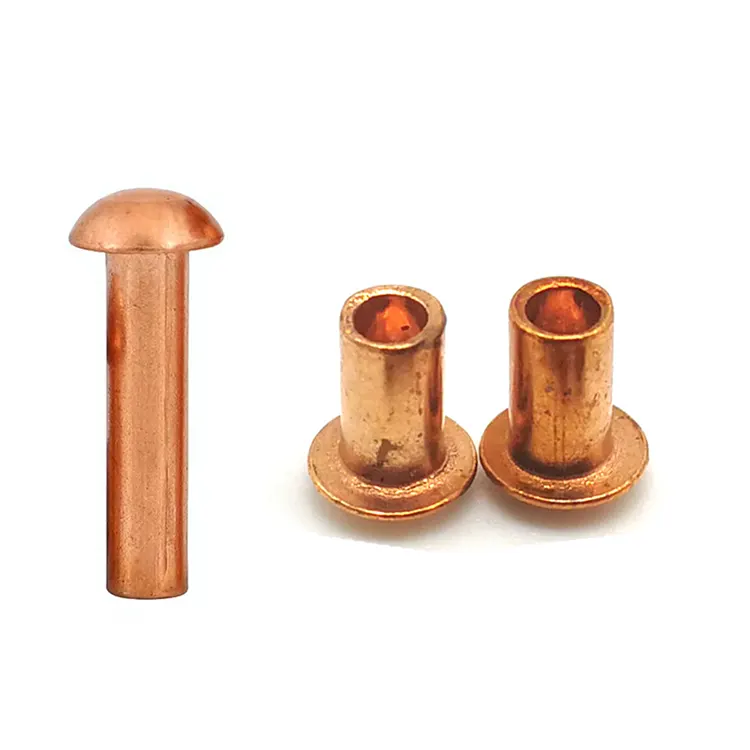
Remaches de cabeza plana de cobre
Los remaches de cabeza plana de cobre son de alta pureza y ofrecen una excelente conductividad, lo que los hace adecuados para aplicaciones que requieren alta conductividad. Nuote Metals se especializa en la producción de remaches de cabeza plana de cobre. Utilizamos calidades con alto contenido de cobre, como C1100, pero también podemos producir calidades personalizadas. Nuestros remaches de cobre se someten a un tratamiento superficial especial para resistir la oxidación y resistir una prueba de niebla salina de 48 horas.
Leer másEnviar Consulta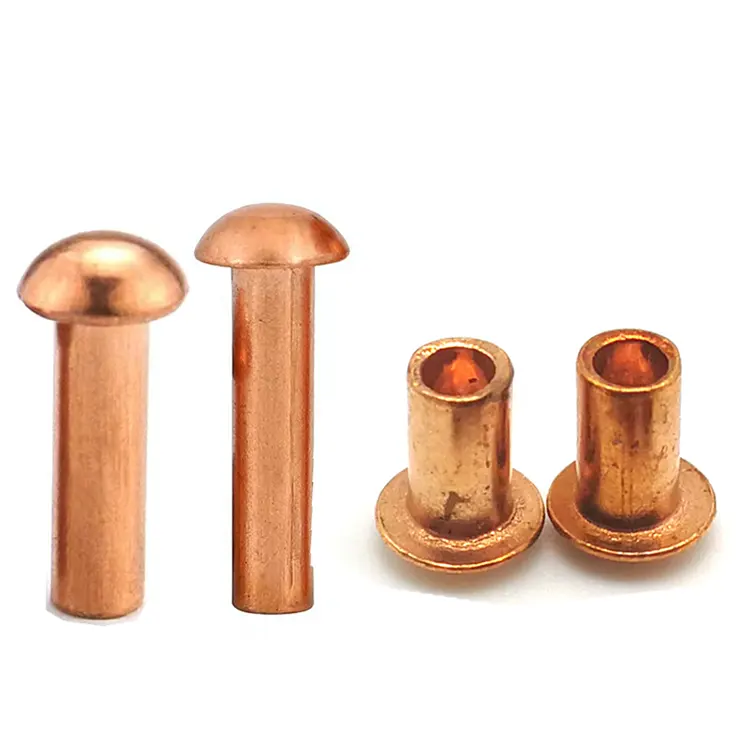
Remaches de cabeza de seta de cobre
Los remaches de cabeza de hongo de cobre son componentes mecánicos que se utilizan para sujetar dos o más materiales. Por lo general, tienen una cabeza en forma de hongo y una varilla sólida o semihueca en el otro extremo. Durante la instalación, el otro extremo se martilla o golpea con una remachadora especializada, lo que hace que se expanda y forme la otra cabeza, que luego encaja en su lugar. Nuote Metals es especialista en remaches de cabeza de seta de cobre. Ofrecemos una amplia gama de especificaciones de remaches y utilizamos más de 40 máquinas remachadoras de varios tamaños para satisfacer las necesidades de los clientes.
Leer másEnviar Consulta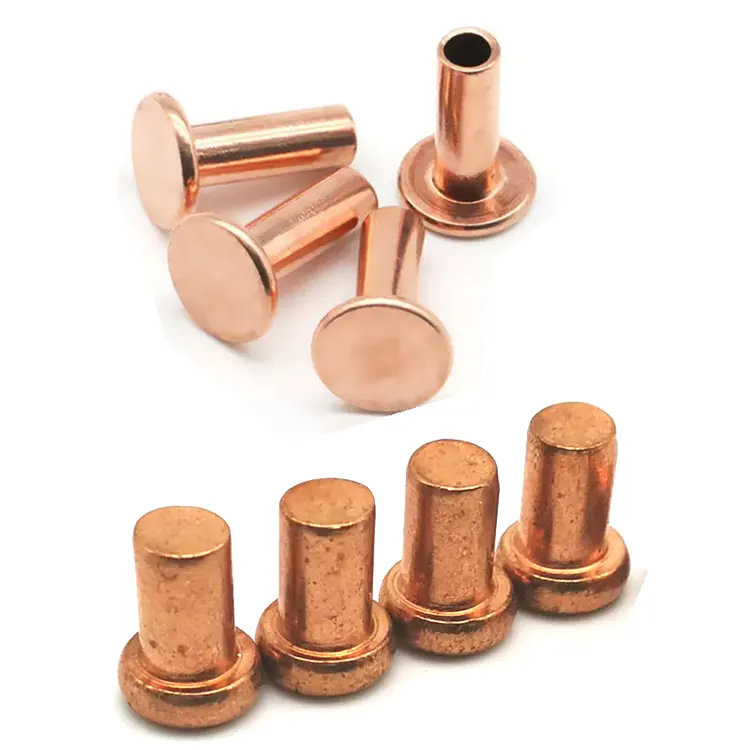
Remaches de cabeza plana de cobre
Nuote Metals, ubicada en Dongguan, China, es un fabricante profesional de remaches. Nuestros remaches son de alta calidad y entrega garantizada, lo que les otorga una reputación favorable entre los clientes nacionales e internacionales. Nuestros remaches de cabeza plana de cobre están hechos de cobre de alta calidad y ofrecen una superficie suave y delicada y una sensación estable y firme. Su diseño de cabeza plana no sólo aumenta el área de contacto sino que también dispersa eficazmente la presión, asegurando una conexión más estable.
Leer másEnviar Consulta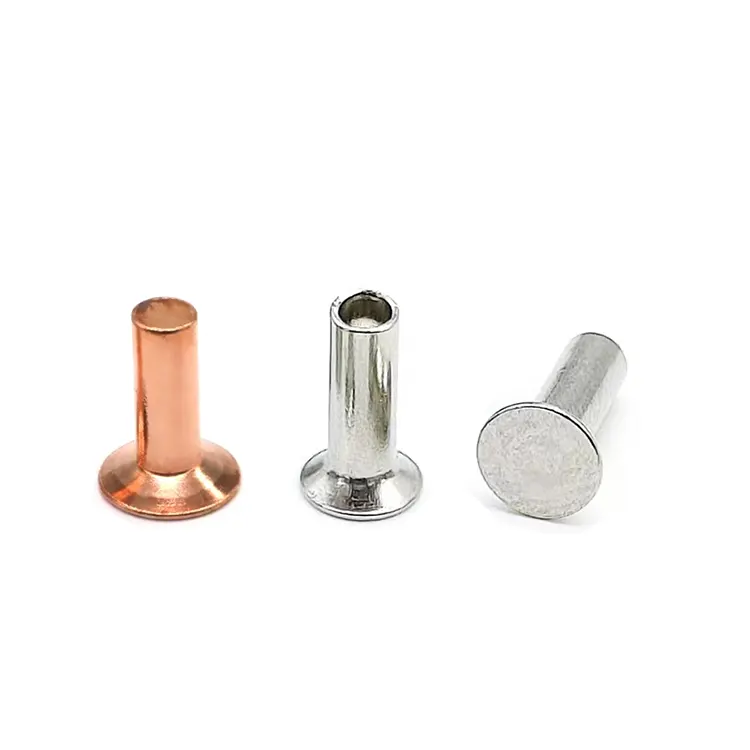
Remaches de cabeza avellanada de cobre
Los remaches de cabeza avellanada de cobre producidos por Nuote Metals en China son sujetadores metálicos comunes que se utilizan principalmente en la fabricación de maquinaria, equipos electrónicos, ensamblaje de muebles y otros campos industriales. Como material metálico tradicional, el cobre tiene una excelente conductividad eléctrica y térmica y resistencia a la corrosión, lo que lo hace popular en aplicaciones específicas. Los remaches de cabeza avellanada son sujetadores fabricados mediante procesos de estampado en frío o forjado en caliente. Su estructura simple requiere herramientas de remachado para crear una conexión especializada.
Leer másEnviar Consulta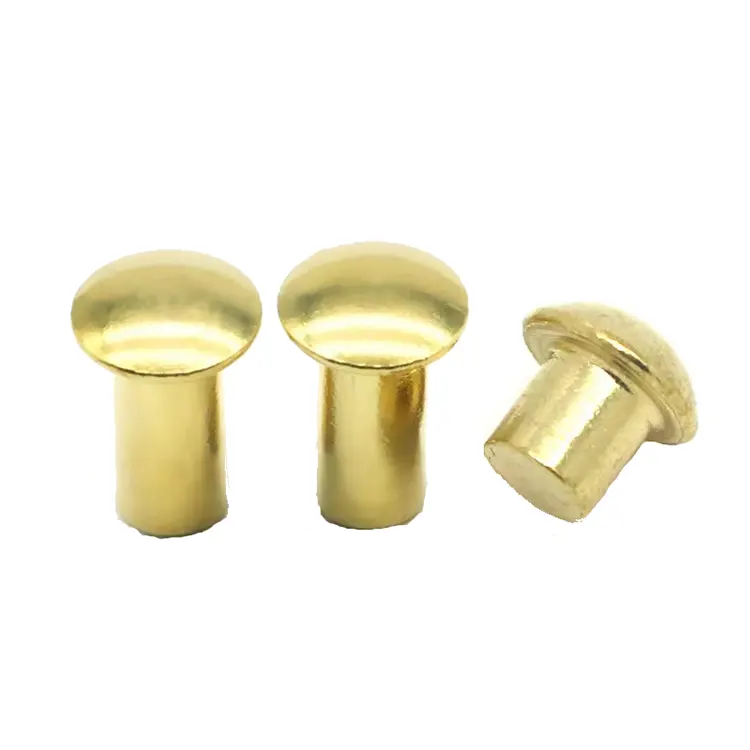
Remaches de cabeza redonda de latón
Nuote Metals se especializa en la producción y venta de remaches de cabeza redonda de latón. Estamos ubicados en Dongguan, China, una ciudad con un fuerte desarrollo industrial. Nuestros remaches de cabeza semi abultada de cobre constan de un vástago y una tapa hechos de aleación de latón. El diseño del cabezal semibulto proporciona una distribución uniforme de la presión, evitando daños a la superficie de la articulación. Se caracterizan por su conductividad eléctrica combinada y resistencia a la corrosión, construcción simple, fácil instalación, alta confiabilidad y larga vida útil.
Leer másEnviar ConsultaProceso de fabricación de remaches especiales.
La fabricación de Remaches Especiales implica múltiples eslabones, entre los que destacan principalmente:
1.Selección de materiales:Seleccione materiales metálicos o de aleación adecuados según el entorno de uso.
2.Rumbo en frío o ruteo en caliente:Utilice el procesamiento a presión para formar la forma básica del remache en la pieza de metal.
3.Torneado o Fresado:Procese con precisión los detalles, como la cabeza y el vástago del remache, para garantizar la precisión dimensional.
4.Tratamiento superficial:Como galvanizado, niquelado, anodizado, etc. para mejorar la resistencia a la corrosión o la estética.
Ventajas y limitaciones de los remaches especiales.
(1) Ventajas: pueden satisfacer necesidades especiales, mejorar la eficiencia del ensamblaje y la confiabilidad de la conexión, y son adecuados para escenarios de aplicaciones complejos o de alta demanda.
(2) Limitaciones: al ser productos personalizados, el costo de producción es alto, el ciclo de entrega es relativamente largo y los clientes deben proporcionar parámetros técnicos detallados.
¿Cómo elegir remaches especiales adecuados?
(1)Aclare las necesidades:Determine los parámetros clave, como el entorno operativo del remache, las condiciones de tensión y los requisitos de resistencia a la corrosión.
(2)Combinación de materiales:Seleccione el material adecuado en función de las necesidades reales para evitar un diseño excesivo que genere mayores costos.
(3)Comunicarse con proveedores:Proporcione dibujos técnicos detallados o muestras para garantizar que los remaches especiales producidos cumplan con las expectativas.
¿Cuáles son las principales aplicaciones de los remaches especiales?
(1)Aeroespacial: Los aviones, cohetes y otros equipos tienen requisitos extremadamente altos en cuanto al peso, la resistencia y la resistencia a altas temperaturas de los sujetadores. Los remaches especiales se pueden optimizar según las necesidades específicas.
(2)Fabricación de automóviles:Ciertos modelos especiales o vehículos de alto rendimiento pueden requerir remaches especiales para satisfacer las necesidades de conexiones livianas o de alta resistencia.
(3)Equipos electrónicos:Los instrumentos de precisión o pequeños equipos electrónicos pueden requerir microrremaches especiales para garantizar la estabilidad y compacidad de la conexión.
(4)Industria de la construcción:Algunos edificios con estructuras especiales o proyectos de decoración pueden utilizar remaches especiales para cumplir con requisitos de instalación específicos.
Estado de mercado de los remaches especiales.
Con el avance de la tecnología industrial, cada vez más industrias han comenzado a utilizar remaches especiales para optimizar el diseño de productos. En la actualidad, los fabricantes de remaches especiales se concentran principalmente en las regiones del delta del río Yangtze y del delta del río Perla en China y pueden proporcionar una variedad de servicios personalizados. Debido al alto precio unitario de los remaches especiales, el tamaño de su mercado es relativamente pequeño, pero la demanda en el campo de la fabricación de alta gama sigue creciendo.
Tendencias de desarrollo futuras
(1)Diseño ligero: Con la mejora de los requisitos de ahorro de energía y protección del medio ambiente, los remaches especiales fabricados con materiales ligeros serán más populares.
(2)Producción inteligente: Los equipos automatizados y la gestión digital mejorarán aún más la eficiencia de producción y la estabilidad de la calidad de los remaches especiales.
(3)Aplicación más amplia: Las industrias emergentes, como las nuevas energías y la robótica, pueden impulsar el crecimiento de la demanda de Remaches especiales.
En resumen, los remaches especiales son sujetadores altamente personalizados que pueden satisfacer necesidades especiales que los remaches estándar no pueden satisfacer. Aunque su costo de producción es relativamente alto, desempeña un papel insustituible en industrias como la aeroespacial, la automotriz y la electrónica. En el futuro, con el avance de la tecnología de fabricación, se espera que el ámbito de aplicación de los remaches especiales se amplíe aún más.



X
Utilizamos cookies para ofrecerle una mejor experiencia de navegación, analizar el tráfico del sitio y personalizar el contenido. Al utilizar este sitio, acepta nuestro uso de cookies.
política de privacidad